







Search Results for: Coffee Regions
Ethiopian Yirgacheffe and Sidamo Regions Explained: A Complete Guide to Brewing and Flavor of Front Street Coffee's Huakui Beans
Ethiopia, as the birthplace of coffee, often confuses beginners with its regional divisions. There are only three officially registered producing regions—Yirgacheffe, Sidamo, and Harar—but the micro-regions actually in circulation are far more numerous. Front Street Coffee will guide you through the relationships among these regions, with a focus on popular sub-regions such as Guji Hambela, Shakiso, and Uraga. The article will also provide a detailed breakdown of the origin information, processing method, and flavor characteristics of Front Street's Huakui G1 coffee beans, along with practical brewing suggestions to help you better savor this natural-process bean with its strawberry and cream aromas. [more…]

A Detailed Guide to the Flavors of Guatemala's Eight Major Coffee Regions: Cupping Characteristics from Acatenango Valley to Volcán San Marcos
Guatemala is an important specialty coffee-producing country in Central America, with eight distinct coffee regions distributed across its territory. In April 2010, Mr. Eduardo Ambrocio of the Guatemalan Coffee Company gave a detailed introduction to these regions to an audience at the SCAA Houston exhibition and presented coffee samples from all eight regions. Based on these sample materials, this article examines one by one the altitude, soil, climate, and processing methods of the eight major regions—Acatenango Valley, Antigua, Traditional Atitlán, Rainforest Cobán, Huehuetenango Highlands, Highland Wet Highlands, New Oriente, and Volcanic San Marcos—and includes the cupping flavor characteristics of the coffee from each region. For friends who love Guatemalan coffee, Front Street Coffee will also recommend a few beans worth paying attention to, helping everyone more intuitively experience the flavor differences among the various regions. [more…]
Colombian Specialty Coffee Varieties, Regions, and Flavor Overview: From MAM Commercial Beans to Southern Specialty Micro-Regions
Colombian coffee, with its inherent advantages of low latitude and high altitude, has become a major hub for specialty coffee. This article sorts out its variety structure—Caturra accounts for about half, the Colombia variety about thirty percent, and Typica only about twenty percent; it analyzes the flavor differences between the three major MAM commercial production regions and Bucaramanga in Santander Department in the northeast; and it focuses on the southern specialty micro-regions of Huila, Cauca, Nariño, and Tolima, all above 1,500 meters, presenting delicate acidity and aromatics, along with berry and caramel sweetness. The article also introduces the FNC's official statements on Caturra and the Colombia variety, and reminds buyers not to look only at the Supremo grade when purchasing—the region labeling is what really matters. Front Street Coffee's Colombian specialty beans are mainly based on southern sub-regions, which is worth noting. [more…]
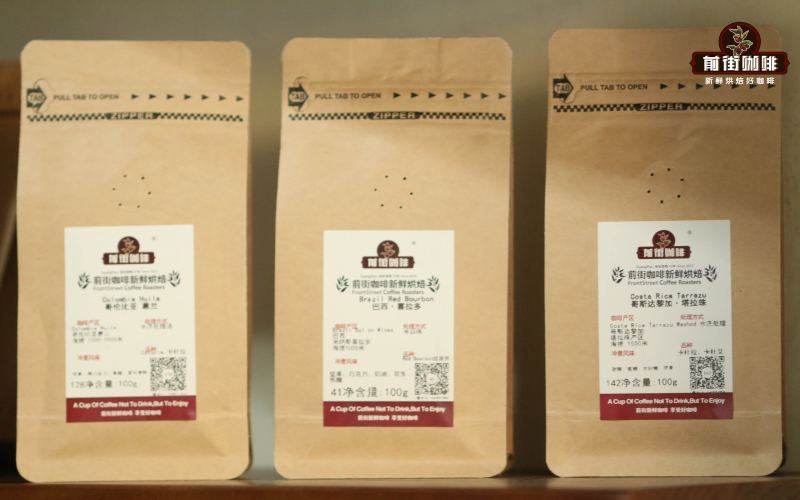
The Flavor Code of Brazilian Coffee Regions: Distribution Characteristics of Six Major Regions and Recommended Representative Brands
As the world's largest coffee producer, Brazil is known for its coffee beans with soft acidity and a smooth mouthfeel, making them ideal for those who are new to specialty coffee and not quite ready for pronounced acidity. Brazil has six major coffee-producing regions: Bahia, Espírito Santo, Minas Gerais, São Paulo, Paraná, and Rondônia. Each region, due to differences in altitude, climate, and cultivation methods, presents distinct flavor characteristics. Among them, the Cerrado region in Minas Gerais is the hallmark of Brazilian specialty coffee, and the Brazilian Red Bourbon daily-drinker beans selected by Front Street Coffee come from here. This article will go through the distribution, growing conditions, and flavor characteristics of the six major regions one by one, and introduce detailed information and brewing suggestions for Front Street's Brazil Cerrado Red Bourbon. [more…]
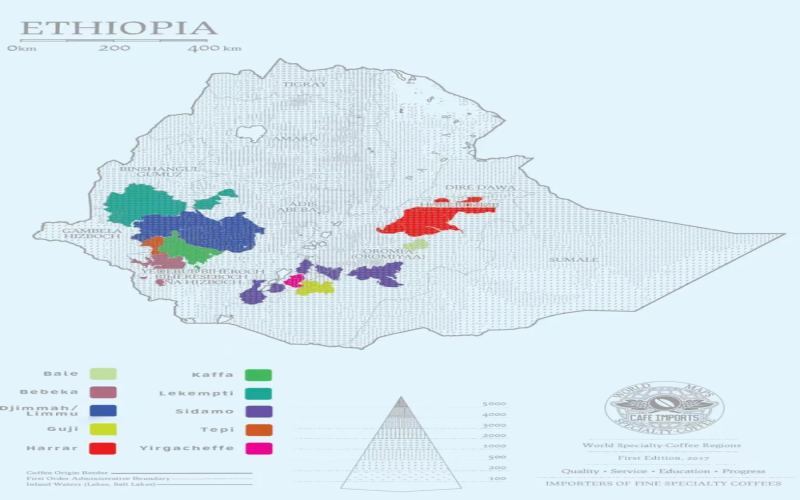
Yirgacheffe, Kochere, and Gedeb: A Detailed Guide to Ethiopia's Specialty Coffee Regions and Cooperatives
Ethiopia, as Africa's largest producer of Arabica coffee, is home to tens of thousands of coffee varieties, with regions such as Yirgacheffe, Sidamo, and Guji each possessing distinctive characteristics. This article focuses on Yirgacheffe and its sub-regions of Kochere and the Gedeb cooperative, outlining their geographical locations, cultivation models, and flavor profiles, and introduces the washed coffee beans corresponding to the Front Street brand. By understanding the division logic of these micro-regions and the operational methods of the cooperatives, coffee enthusiasts can more clearly grasp the traceability context and regional flavors of Ethiopian specialty coffee. [more…]

Coffee Regions, Processing Plants, Cooperatives, and Estates: Understanding the Roles in the Supply Chain from Cultivation to Sale
When we talk about specialty coffee, we often hear terms like origin, processing station, cooperative, and estate. They each represent different stages and organizational forms within the coffee supply chain. This article will start with definitions and analyze the differences and connections among these four one by one: how origins are divided into large and small, why processing stations centralize the processing of coffee cherries, how cooperatives help coffee farmers join forces, and why estates enjoy greater autonomy. Understanding these concepts will not only help you more clearly interpret the information on coffee bean labels, but also let you better understand the story behind every cup of coffee when making a purchase. [more…]
A Complete Guide to Ethiopian Coffee Bean Regions: Heirloom Flavors, Nine Major Regions, and Representative Beans
Ethiopia is the birthplace of coffee, with rich heirloom genetic resources and diverse producing regions. This article systematically reviews Ethiopia's nine major coffee regions, including Yirgacheffe, Sidama, Harar, Gimma, and Limu, explaining in detail each region's altitude, processing methods, variety characteristics, and flavor differences. It also introduces several representative Ethiopian beans from Front Street Coffee, such as naturally processed Yirgacheffe Bolifi, Sidama Zhuomang, and washed Gimma and Limu, helping coffee enthusiasts gain a comprehensive understanding of the regional flavors of Ethiopian coffee and how to choose beans. [more…]

Flavor Analysis of Latin American Coffee Regions: The Path of Richness and Balance from Brazil to Colombia
Latin America is one of the most important coffee-producing regions in the world, known for its balance, body, and mild fruit acidity, with flavor profiles that often present cocoa and dark chocolate notes. As the world's largest coffee producer, Brazil, despite its relatively low altitude and somewhat flat flavor, still produces high-quality specialty coffee through variety improvement and processing method adjustments. Colombia, on the other hand, occupies a unique position with its rich aroma, bright acidity, and nutty flavors. This article will systematically review the main producing regions, processing method characteristics, and flavor expressions of Brazil and Colombia, and recommend related specialty coffee beans from the Front Street Coffee brand, providing coffee enthusiasts with a practical guide to Latin American coffee. [more…]
An Analysis of Ethiopia's Nine Major Coffee Regions and the Distinctive Features of Yirgacheffe: A Complete Guide from Processing Methods to Flavor
Ethiopia, as the birthplace of coffee, is divided into nine major coffee regions within its borders based on differences in processing methods, among which five specialty regions such as Yirgacheffe and Sidama have long been renowned. Different regions, due to their differing emphasis on natural or washed processing, present flavor profiles each with their own character. This article will systematically review the distribution and characteristics of these nine regions, focus on interpreting Sidama's performance in the cup, and introduce Ninety Plus, known for its rare green beans. At the same time, Front Street Coffee will also combine regional characteristics to provide enthusiasts with reference directions for bean selection and tasting, taking you to deeply understand the diverse charm of Ethiopian coffee. [more…]
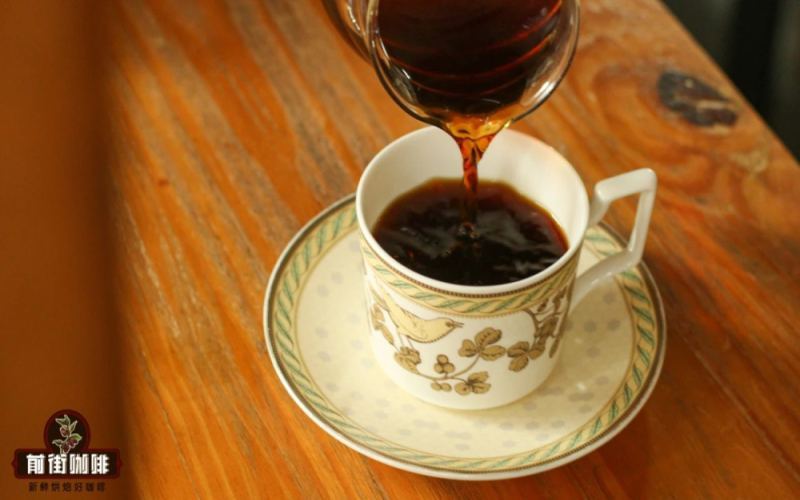
What makes Ethiopian coffee so unique? A comprehensive analysis from growing regions to flavor processing methods
Ethiopia is widely recognized as the birthplace of coffee, with numerous producing regions within its borders, each offering distinct flavors. Compared with the expensive Panama Geisha, Ethiopian coffee—thanks to its affordable price and bright, high-quality fruit acidity—has become the first choice for many people stepping into the world of specialty coffee. From the delicate floral notes of Yirgacheffe to the wild berry flavors of Sidamo, different regions and processing methods give Ethiopian coffee a rich and varied character. Nearly one-third of the coffee beans on the shelves at Front Street Coffee come from Ethiopia, which speaks volumes about its standing in the hearts of coffee lovers. This article will systematically outline Ethiopia's coffee-producing regions, the evolution of processing methods, and the flavor characteristics of representative coffee beans. [more…]

A Full Analysis of Kenyan Washed Coffee Flavors: Pour-Over Performance and the Origins of Berry Notes in Three Specialty Regions
Kenyan coffee has long been known for its vivid berry notes, but a country label alone can no longer satisfy enthusiasts' curiosity about the details of its origins. This article focuses on three major specialty regions in Kenya—Nyeri, Kirinyaga, and Muranga—sorting out their respective geographical environments, altitude ranges, main varieties, and harvest rhythms, and, combined with Front Street Coffee's cupping records, presents the flavor differences among regions under washed processing. At the same time, readers are reminded that regional styles are not ironclad rules; altitude, variety, and processing method all influence the direction of the final cup. [more…]
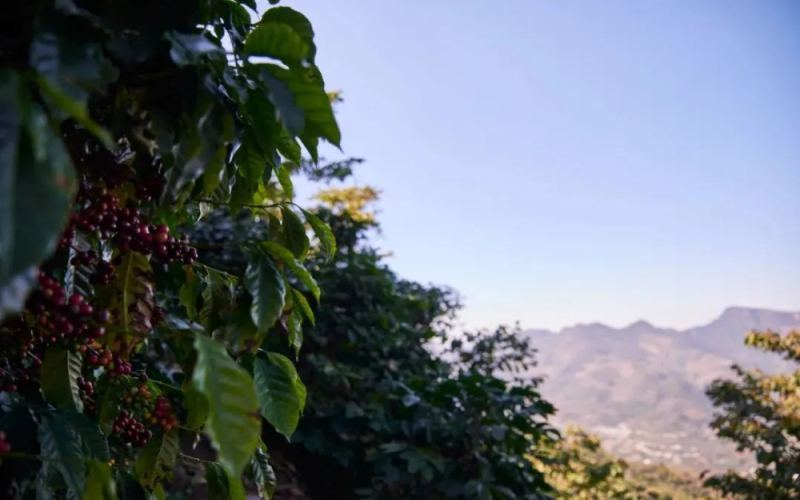
What makes Guatemalan coffee unique? A comprehensive analysis of the flavors and processing methods of eight major producing regions
Guatemala is home to over three hundred microclimates, where volcanic soil and high-altitude terrain nurture specialty coffee with distinctive flavors. From the balanced fruit acidity of Antigua to the bright fruity aromas of Huehuetenango, the eight major regions each have their own character. This article will guide you through Guatemala's coffee-growing regions, varietal characteristics, grading methods, and washed processing procedures, while also analyzing its signature flavor profile. Front Street Coffee has a particular affection for this land; the Flora coffee beans on its menu come from the Antigua region, washed processed, with a delicate flavor, and are well worth trying. [more…]
A Complete Analysis of Jamaica Blue Mountain Coffee Regions: Three Major Regions, Grading System, and a Review of Blue Mountain No.1 Brands and Prices
Jamaican Blue Mountain coffee is one of the most prestigious coffees in the world, but do you really understand its production regions, grading rules, and brand landscape? This article starts with the three major regions of Saint Andrew, Portland, and Saint Thomas, sorts out the quality and price logic behind the BM, HM, and PM three-tier classification, and explains the traditional barrel packaging, the market role of Japan's UCC, and the brand characteristics and price rankings of Blue Mountain No. 1 coffee beans. The article also retains related recommendations from Front Street Coffee, making it suitable for enthusiasts who want to gain a deeper understanding of Blue Mountain coffee to read and save. [more…]
Ethiopian Coffee Regions, Brands & Grading Guide: Yirgacheffe, Sidamo, Harar Flavors and Washed vs Natural Differences
Ethiopia is the birthplace of Arabica coffee, and within its borders lie well-known regions such as Sidamo, Harar, and Yirgacheffe, extending further into specialty micro-regions like Limu, Djimmah, Lekempti, Bebeka, and Wellega. Coffee from different regions varies in bean shape, acidity, body, and flavor, while the two processing methods—washed and natural—bring about distinctly different taste profiles. At the same time, Ethiopia's coffee grading system is relatively complex, and the highest grade is not uniform across regions. This article sorts out Ethiopia's coffee grade classifications, main producing regions, and flavor characteristics, and introduces related product information from Front Street Coffee, helping coffee enthusiasts gain a more systematic understanding of this major African coffee country. [more…]
A Complete Analysis of the Main Arabica Coffee Producing Regions: Flavor Characteristics of the Three Major Regions and Introduction of Representative Bean Varieties
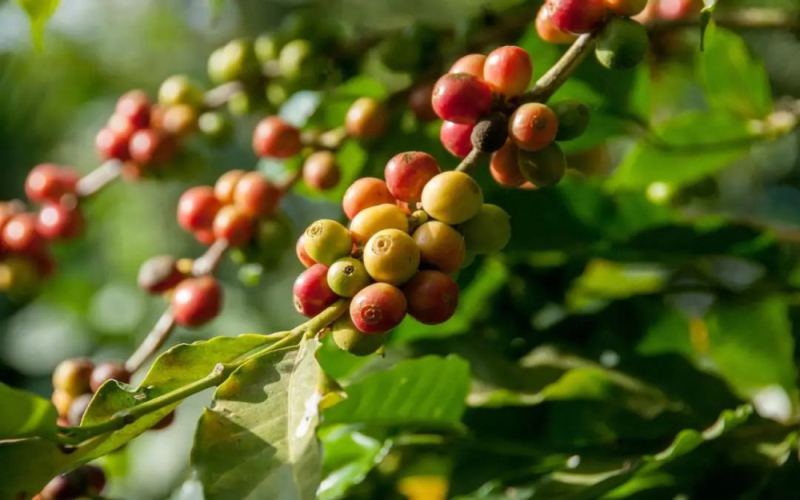
Arabica coffee accounts for more than seventy percent of global coffee production and has extremely strict requirements for its growing environment. Starting from the coffee belt on both sides of the equator, the three major producing regions of Latin America, Africa, and Asia-Pacific each nurture distinctly different coffee flavors. This article systematically sorts out the distribution of Arabica's main producing areas, introducing one by one the terroir conditions and cupping characteristics of representative producing areas such as Brazil Cerrado, Colombia Huila, Guatemala Huehuetenango, Costa Rica Tarrazu, Indonesia Sumatra, China Yunnan Baoshan, and Ethiopia Yirgacheffe, while also sharing the selection approach of the Front Street Coffee daily drinking bean series, helping coffee enthusiasts build a cognitive framework for the basic flavors of each producing area. [more…]
Colombian Coffee Regions and Varieties Explained: From Caturra to Recommended Single-Origin Beans from Famous Estates
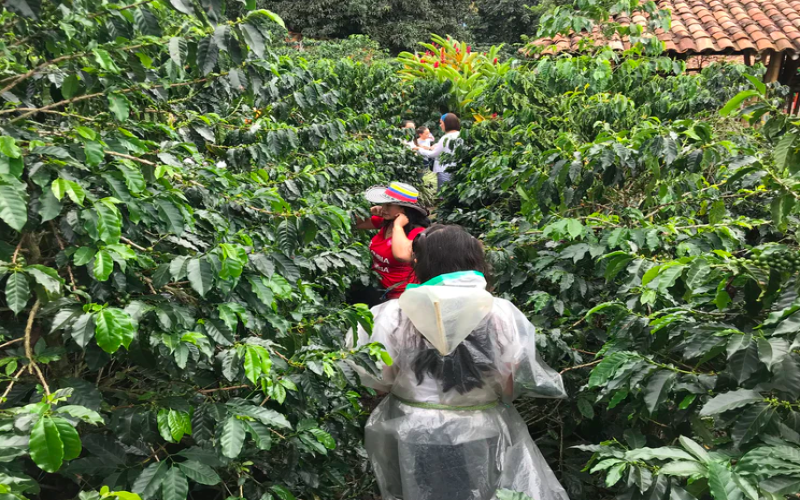
Colombia is located in the northwest of South America. With its high altitude and fertile volcanic soil, it has become a major global producer of Arabica coffee. Its coffee is known for a rich, dark-chocolate-like body and caramel sweetness, with a flavor far more complex than that of flat-terrain Brazilian coffee. Colombia's growing regions are divided into two major segments: commercial beans and specialty beans. The northern MAM region focuses on intense chocolate notes, while the high-altitude southern regions are known for delicate acidity and berry flavors. At present, the country's main varieties are Caturra and the self-developed Colombia and Castillo, along with a small amount of Geisha. This article will guide you through the distribution of Colombia's coffee-growing regions and the characteristics of its varieties, and recommend the consistently high-quality Front Street washed Huila coffee beans. [more…]
A Complete Analysis of Brazilian Coffee Regions, Flavors, and Bean Characteristics: Production, Origins, and Representative Varieties
Brazil is a major player in the global coffee landscape, with coffee farms found in half of its 26 states, but the main producing regions are concentrated in five states in the southeast: Bahia, Espírito Santo, Minas Gerais, Paraná, and São Paulo. Among them, Minas Gerais contributes nearly half of the country's total production and is further divided into four sub-regions with distinct terroir characteristics: Cerrado, Chapada, Matas, and Sul de Minas. Espírito Santo is an important stronghold for Robusta, São Paulo is home to premium producing areas such as the Port of Santos and Mogiana, Bahia has risen rapidly through high-tech cultivation, and northern Paraná focuses on Arabica. The following will examine each producing region one by one in terms of altitude, climate, representative varieties, and cup flavor, helping coffee enthusiasts build a systematic understanding of Brazilian coffee. [more…]
Global Coffee Bean Producing Regions Explained: An Overview of Coffee Belt Climate Characteristics and Flavor Differences Across Three Continents
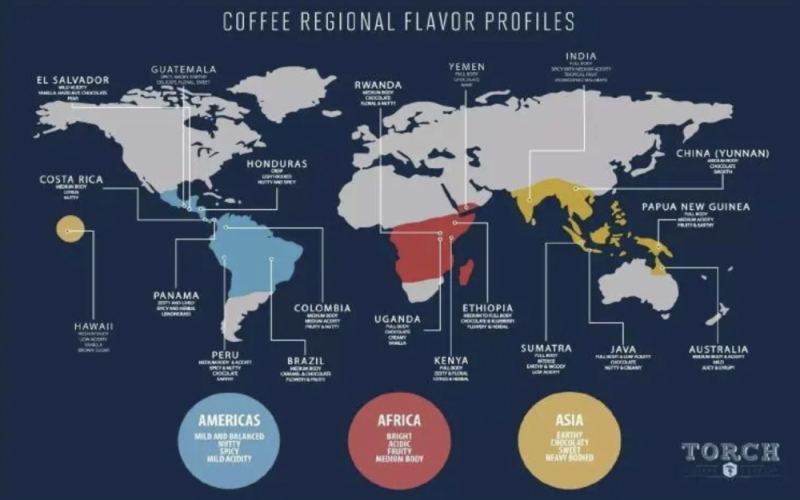
The growth of coffee trees has strict requirements for the natural environment. The world's major coffee-producing regions are concentrated in a narrow strip between the Tropic of Cancer and the Tropic of Capricorn, known in the industry as the Coffee Belt. This region spans Africa, Central and South America, and Asia, with an average annual temperature above 20 degrees Celsius, warm weather year-round, frost-free winters, abundant sunshine, and ample rainfall, providing ideal growing conditions for coffee trees. Even coffee of the same variety, when grown in different countries or regions, can present completely different flavors in the cup—differences in altitude, climate, and soil give each bean its own unique regional imprint. Front Street Coffee has repeatedly verified this pattern in daily cupping sessions. Starting from the characteristics of producing regions across three continents, this article will sort out their respective flavor trends and representative coffee beans. [more…]
Flavor Comparison of Kenyan Coffee Regions: What Are the Characteristics of Nyeri, Kirinyaga, and Murang'a? An Analysis of Washed AA Beans
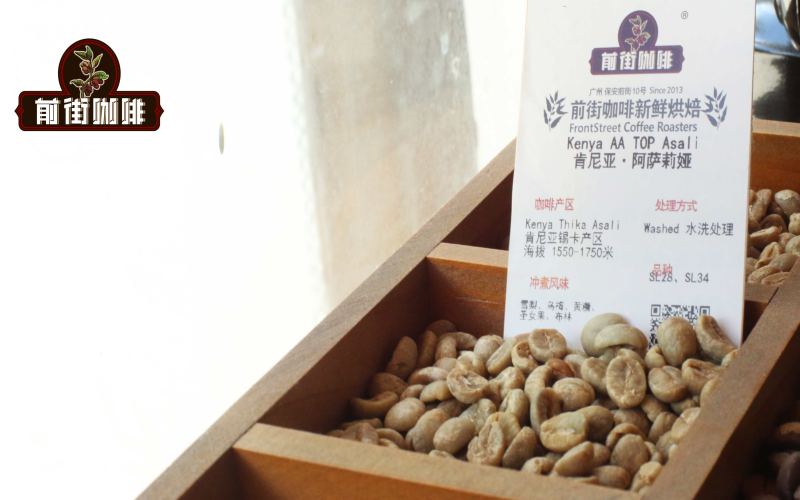
肯尼亚是非洲最具代表性的咖啡产国之一,以强烈的莓果酸香闻名,常驻各大精品咖啡馆。但仅以国家论风味已难以满足咖啡爱好者的好奇,肯尼亚内部其实划分出多个产区,各自呈现不同调性。本文梳理肯尼亚七大产区,重点聚焦尼耶利、麒麟雅嘉、穆兰加三个精品产区,结合前街咖啡的杯测实践,对比它们的水洗AA咖啡风味差异,并提醒读者产区风味并非绝对,海拔、品种、处理法都会影响最终表现。 [more…]
A Complete Analysis of the Flavor and Mouthfeel of G1 Grade Coffee Beans from Ethiopian Regions Such as Yirgacheffe and Sidama
As the birthplace of coffee, Ethiopia boasts numerous coffee regions with distinctive characteristics. Among them, Yirgacheffe, Sidamo, and Harar are the most well-known, while the G1 grade represents the highest quality coffee beans in the country. This article will take you on an in-depth journey through the terroir and characteristics of Ethiopia's nine major coffee regions, from the rich fruity aromas of Yirgacheffe to the delicate floral notes of Sidamo, from the wild mocha of Harar to the balanced flavors of Jimma, and will provide a detailed analysis of the flavor profiles and tasting characteristics of G1 grade coffee beans from each region, offering coffee lovers a complete guide to Ethiopian coffee. [more…]